
What will the 21st century be made of? Many tasks will be taken care of by computers, which already do everything that is repetitive and which become capable of learning and adjusting, like driving a car. The wheel will turn to the detriment of those who have obsolete qualifications
Robotics, artificial or digital intelligence (we no longer say computer science, it seems) are regularly presented as the next threat. All these devices soon as intelligent as us, if not more, will they not replace us and plunge us into unemployment. We can still darken the picture by mentioning the civil wars that will break out everywhere when the masses of desperate unemployed will have no other choice but violence to express their suffering.
Technologies, because they disrupt our lives, destabilize
It is not new. Since the dawn of the industrial revolution, the emergence of new technologies has been accompanied by similar predictions. Because technologies are upsetting our lives, they are destabilizing. Because they change the way we work, they worry. Because they are accompanied by redistribution of wealth, they provoke exacerbated reactions, sometimes violent. What is striking today is how easy it is to forget history.
No more small shopkeeper deemed friendly
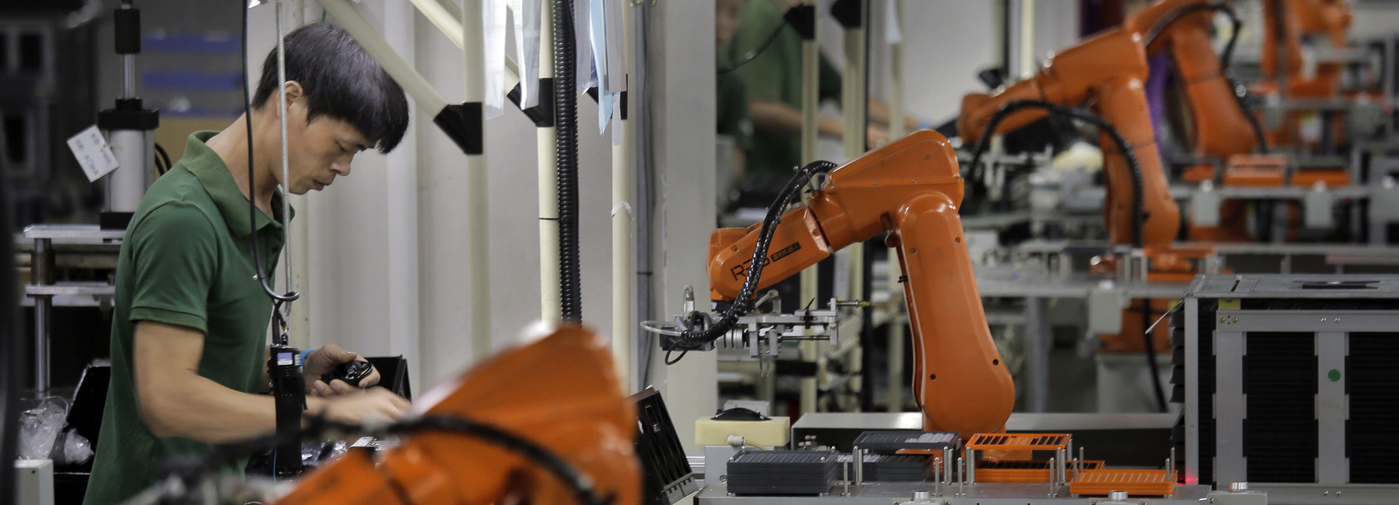
The car-building chains, which used to be labor-intensive, today employ a limited number of employees, many of whom only supervise robots. Retail trade is replaced by hypermarkets or distance selling sites, where orders are prepared by robots. No more small shopkeepers deemed friendly, hello the anonymity of the shelves or the computer screen. We will soon have computerized medical diagnosis and remote surgical procedures.
It is easy to conclude that many professions are bound to disappear. It’s going a little fast. Most will not go away, but they will be profoundly transformed. For example, it is possible that the buildings will be made of prefabricated modules and then assembled. The masons of tomorrow will work either to make the modules, or to assemble them on site, controlling the robots that will do the job.
Two anxiety-provoking questions arise. First, will it massively create unemployment? The traditional masons will see their activity strongly decrease. This is the usual effect of technological progress. The bootmakers have practically disappeared, but we still wear shoes, now produced in the factory, often abroad and soon all made by robots.
It is labor that limits production capacity
This does not mean, however, a lasting increase in unemployment. The reason is a very general observation. The production capacity of a country, or even the world, is limited by a single factor: the workforce. Give me a million people and I will equip them with the means of production – buildings, machines, infrastructure, training. Give me another million, and I’ll do it again. It is the means of production that adapt to the amount of labor, not the other way around.
The job market never works perfectly
It may be objected that not all the labor is employed. True, but for two reasons. First, the job market never works perfectly. The more dysfunctional it is, the more people are unemployed. This is the explanation between Switzerland (unemployment rate of 4.5%) and France (10.4%). Then, some people do not have the required qualifications, like traditional masons. In time, we stop training them. In the meantime, they have to resettle. Some will succeed, perhaps by having to accept a drop in their income. Others will not, and there will be a temporary increase in unemployment.
The inequalities thus created
The second question concerns the inequalities that will be created. The industrial revolution of the 19th century replaced artisans with increasingly automated factories. Those who benefited were the highly qualified – business leaders and professionals – but also those without qualifications which the production lines needed so much. Admittedly, they were badly paid and the working conditions were painful, but it was better than in the agriculture from which they came.
Those who lost were the middle classes, the artisans whose trades were disappearing. In the 20th century, the wheel turned. Activities have become more complex and less routine, administrative tasks have grown. The low-skilled, the blue-collar workers, lost and the white-collar workers won.
What will the 21st century be made of
What will the 21st century be made of? Many tasks – not all subordinate, far from it – will be taken care of by computers, which already do everything that is repetitive and which become capable of learning and adjusting, like driving a car. The wheel will turn to the detriment of those with obsolete qualifications, for example multilingual secretaries or white-collar workers in both public and private administration. Of course, everyone who can produce countless computer applications will be among the winners. But also those who are creative and those who have to react to emotions (salespeople or security guards, for example) and unexpected events (surgeons or police).
An opportunity and a threat
Above all, we must not lose sight of the fact that technological progress is both an opportunity and a threat. A threat to some and an opportunity for all. Over the past 150 years, the standard of living has increased tenfold in Switzerland. It had quadrupled in the previous two millennia. The winners make up for the losers.
 CNET NEWS BLOG